How Clean Does My House Need to Be Before Listing It?
Your house doesn't need to be spotless or look like a model home before you list it for sale. But it should be clean enough that buyers can comfortably walk through, appreciate the space, and focus on the home itself rather than the things that need cleaning.
The goal is to make your home feel clean, well-maintained, and ready for someone else to move in. That usually means a thorough cleaning, reducing clutter, addressing noticeable odors, and paying extra attention to kitchens, bathrooms, and floors. It doesn't mean replacing everything that's outdated or spending weeks scrubbing areas buyers may never notice.
If you're preparing to sell your home in East Central Minnesota, knowing where to spend your time can make the process much easier. Here's what matters most, what you can reasonably skip, and how to get your home ready for photos and showings without exhausting yourself.
How Clean Should Your House Be Before Listing?
Aim for a deep-cleaned, decluttered home rather than everyday tidy. Buyers should be able to open a door, walk into a room, and feel comfortable examining the property.
Think about the difference between cleaning your house before having friends over and preparing it for someone who's considering buying it.
When friends visit, they probably aren't examining the baseboards, looking inside closets, or checking the condition of the shower. Buyers may do all three.
That doesn't mean every surface needs to be perfect. It means the areas buyers notice should be clean enough that dirt, clutter, and odors don't distract from the home's features.
Before listing, I generally recommend focusing on five things:
Clean surfaces: Floors, countertops, sinks, appliances, windows, and fixtures should be free of visible dirt and buildup.
Uncluttered rooms: Buyers should be able to see the available floor space and understand how each room functions.
Fresh-smelling spaces: Address the source of unpleasant odors rather than covering them with fragrances.
Accessible storage: Closets, cabinets, basements, and garages should be reasonably organized so buyers can evaluate the space.
A welcoming exterior: The entrance, walkways, porch, and yard should look maintained and be safe to access.
One thing I remind sellers is that a home can be older, have dated finishes, or show normal signs of use and still present very well.
Cleanliness and condition are related, but they're not the same thing.
An older kitchen with clean cabinets and countertops can make a better impression than a recently updated kitchen covered in dishes and clutter.
Which Areas of Your Home Need the Most Attention?
Not every room requires the same amount of cleaning. Some spaces deserve extra attention because buyers use them to evaluate how well a property has been maintained.
1. Kitchen: Clean Beyond the Countertops
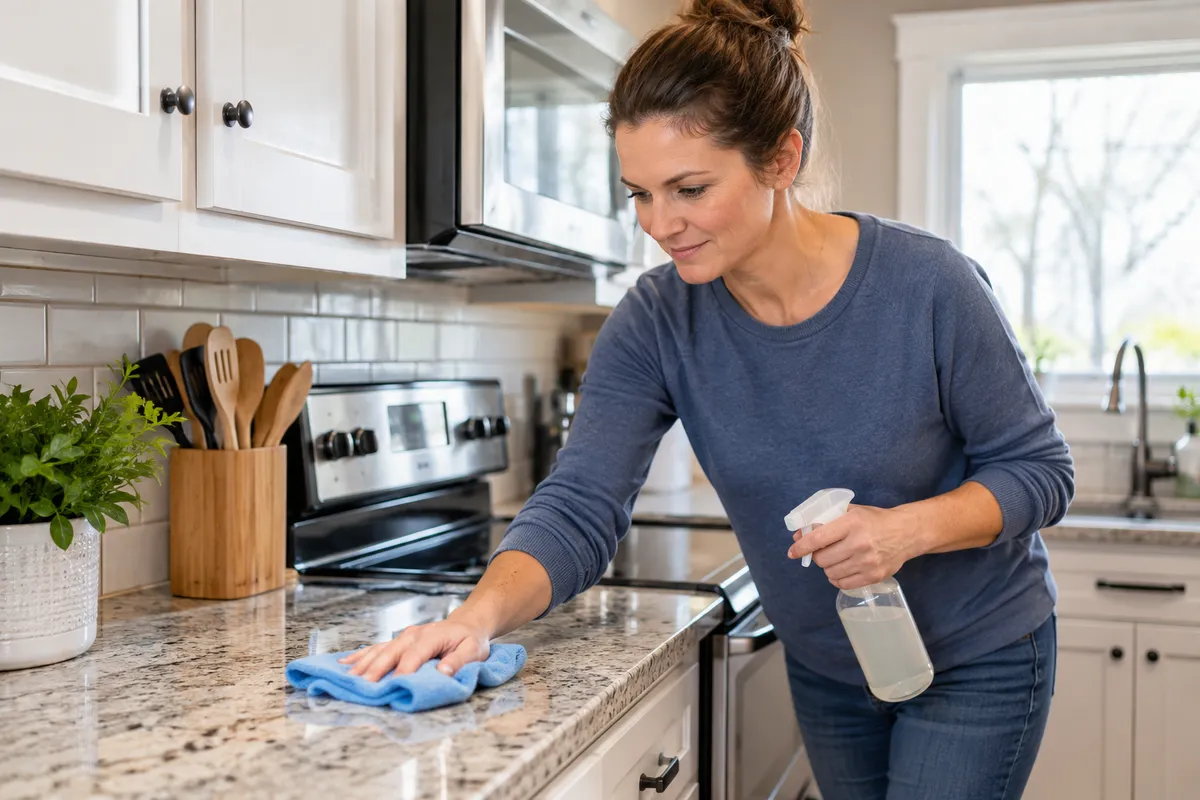
The kitchen is one of the first places I'd recommend spending extra time.
Buyers notice the condition of appliances, cabinets, countertops, and flooring. They may also open cabinets or look inside appliances that are included in the sale.
Before listing:
Clean the stovetop, oven, microwave, and range hood.
Wipe down cabinet doors, handles, and backsplashes.
Remove grease buildup around cooking areas.
Clean the sink and faucets.
Clear most small appliances and personal items from countertops.
Wipe down the refrigerator, including the inside if it's staying with the home.
Empty the trash and address lingering food odors.
You don't need to remove every item from the kitchen. A coffee maker or a few neatly arranged essentials are perfectly reasonable.
The idea is to show buyers how much usable space the kitchen offers.
2. Bathrooms: Pay Attention to the Details
Bathrooms should receive a thorough cleaning before photography and showings.
Even minor buildup can become noticeable when buyers are standing in a relatively small room examining fixtures.
Focus on:
Removing soap scum and mineral deposits.
Cleaning toilets, sinks, tubs, and showers.
Wiping mirrors and glass shower doors.
Cleaning grout and addressing mildew.
Washing floors and baseboards.
Removing personal toiletries from visible surfaces.
Replacing heavily stained shower curtains or worn toilet seats when appropriate.
If there's persistent mold, moisture damage, or a leak, don't treat it as a simple cleaning issue. Those concerns may need professional evaluation or repair.
Fresh towels and a clean countertop can help a bathroom feel inviting without requiring expensive updates.
3. Living Areas: Make the Space Easy to See
Living rooms and family rooms don't necessarily need intensive cleaning once the obvious dirt has been addressed.
Here, decluttering often makes the biggest difference.
Remove excess furniture that makes the room difficult to walk through. Organize entertainment areas, put away loose items, and clean visible surfaces.
Pay attention to pet hair on furniture, dust on ceiling fans, and fingerprints on glass doors.
If your living room feels crowded, consider temporarily storing a chair, side table, or other furniture you don't regularly need.
Buyers should be able to understand the room's layout without mentally moving furniture around.
4. Bedrooms: Keep Them Simple and Comfortable
Bedrooms don't need elaborate staging to look presentable.
Make the beds, put away clothing, clear nightstands, and remove unnecessary furniture.
Closets should also be reasonably organized. You don't have to empty them, but buyers should be able to see the shelving, hanging space, and general storage capacity.
A bedroom that feels calm and spacious is easier to appreciate than one filled with laundry baskets, extra furniture, and overflowing closets.
5. Basements, Garages, and Utility Areas: Don't Ignore Them
This is one area where sellers sometimes underestimate what buyers will want to see.
In East Central Minnesota, homes can have a variety of layouts, including unfinished basements, attached garages, detached garages, and additional storage buildings.
These areas don't need to look like finished living spaces.
However, buyers should be able to safely access important areas and see what they're purchasing.
For example:
Clear pathways through garages and basements.
Sweep away dirt, debris, and cobwebs.
Organize tools, storage bins, and seasonal equipment.
Keep electrical panels, furnaces, water heaters, and other mechanical equipment accessible.
Address obvious moisture or water intrusion concerns.
Remove hazardous materials or store them safely.
If your property has a well, septic system, or other equipment that may need inspection, make sure the relevant access points can be reached.
An unfinished basement doesn't need to be beautiful. It should be reasonably clean, accessible, and accurately represented.
Should You Deep Clean, Declutter, or Make Repairs First?
If you're looking at a long list of things to do before selling, it's helpful to understand the difference between cleaning, decluttering, and repairs.
They serve different purposes.
Task | What it accomplishes | Example |
Cleaning | Removes dirt, stains, dust, and odors | Scrubbing bathroom fixtures |
Decluttering | Makes rooms and storage easier to evaluate | Packing away excess belongings |
Minor repairs | Addresses visible wear or things that don't function properly | Fixing a leaking faucet |
Staging | Improves how a room looks and functions for buyers | Rearranging furniture |
A common mistake is spending money on decorative improvements while overlooking basic cleaning or maintenance.
For example, purchasing new throw pillows probably won't make much difference if the carpet has noticeable stains or the bathroom has an unpleasant odor.
Start with the things that affect how buyers experience the property.
If your time or budget is limited, I would generally prioritize cleaning and addressing important maintenance concerns before spending money on decorative updates.
A clean house doesn't have to be an updated house.
And an updated house still needs to be clean.
Do You Need to Hire a Professional Cleaner Before Selling?
No. Professional cleaning isn't required to list your home, and plenty of homeowners can prepare their properties themselves.
The decision depends on the home's condition, your available time, your budget, and how much work needs to be done.
A professional cleaning service may be worth considering if:
You've lived in the home for many years and haven't done a thorough deep cleaning recently.
You're managing work, children, pets, or an upcoming move.
The home has significant dust, grease, or buildup.
You're selling a vacant property that needs cleaning after furniture has been removed.
You want help getting everything ready before professional photography.
You can also hire help for specific tasks rather than paying for a complete cleaning service.
For example, you might handle the regular housecleaning yourself and hire someone for carpet cleaning or hard-to-reach windows.
Before booking a cleaner, ask what's included. Some services charge separately for interior ovens, refrigerators, windows, baseboards, and other detailed work.
The important question isn't whether you hired someone.
It's whether the home is ready for buyers to see.
What If You Can't Afford a Professional Cleaning?
Start with the most noticeable areas and work your way through the house.
Clean the kitchen and bathrooms thoroughly, remove clutter, vacuum or mop the floors, and wash visible windows and glass.
Then address the smaller details as time allows.
You don't need to spend money simply because you're preparing to sell. A thoughtful cleaning plan can make a meaningful difference without adding unnecessary expenses.
What About Pet Odors, Carpet Stains, and Everyday Wear?
Some of the most important cleaning concerns aren't always obvious to the people living in the home.
That's especially true with odors.
After spending years in a house, it's easy to become accustomed to how it smells. Buyers walking in for the first time may notice something immediately.
Pet Odors
If you have pets, clean their bedding, vacuum upholstered furniture, and pay attention to carpeting and areas where they regularly spend time.
Cat litter boxes should be cleaned frequently and, when practical, kept out of sight during showings.
If pet accidents have affected carpeting or flooring, surface cleaning may not be enough. Depending on the extent of the problem, professional treatment or replacement of damaged materials may be necessary.
Avoid using strong air fresheners to cover odors. Heavy fragrances can be distracting and may cause buyers to wonder what's being concealed.
Carpet Stains and Worn Flooring
A few signs of normal wear don't automatically mean you need new flooring.
If the carpet is in generally good condition but looks dirty, professional cleaning may help.
However, carpeting with significant staining, persistent odors, or extensive damage deserves a closer look.
Before replacing flooring, discuss the condition and likely buyer expectations with your REALTOR®.
A flooring replacement can be a substantial expense, and it isn't always the best use of your preparation budget.
Smoke, Cooking, and Moisture Odors
Persistent odors deserve attention before listing.
Cooking smells may improve with thorough cleaning and ventilation. Smoke odors can require more extensive treatment, especially when they have affected walls, flooring, or other materials.
Musty smells should be investigated rather than covered up.
If moisture is entering the home, cleaning alone won't resolve the underlying issue.
This is also where it's important to distinguish between preparing a home for sale and addressing a condition that may need to be disclosed to buyers.
Cleaning doesn't eliminate a seller's responsibility to provide applicable property disclosures.
What Cleaning Matters Most for Minnesota Homes?
The basic expectations for a clean home are similar almost everywhere, but Minnesota's seasons can create a few additional preparation challenges.
In East Central Minnesota, I encourage sellers to pay attention to the property's exterior and entryways, particularly when weather conditions affect how buyers approach and enter the home.
Selling During Winter
Snow, ice, road salt, and wet boots can make it difficult to keep entryways clean.
Before photography or showings:
Clear snow and ice from walkways, steps, and driveways.
Remove tracked-in salt and dirt from flooring.
Keep entry mats clean and presentable.
Make sure exterior doors and entrances are accessible.
Check for condensation or moisture around windows.
If you have an attached garage, consider how buyers will access it and what they'll see when they enter.
Winter weather doesn't mean your home has to look perfect outside. Safe access and reasonable maintenance are the priorities.
Selling During Spring and Summer
Melting snow, muddy conditions, pollen, and yard debris can create additional work.
Clean exterior windows when conditions allow, remove leaves and debris from entrances, and keep walkways reasonably clear.
During warmer months, mow the lawn as needed, trim overgrown vegetation, and tidy outdoor living areas.
If you're selling a rural property or a home with acreage, don't assume the entire property needs to be landscaped like a suburban yard.
For example, imagine preparing a home outside Cambridge with a detached garage, a large yard, and a wooded portion of the property.
The most useful preparation may be cleaning the house, clearing the driveway and walking paths, organizing the garage, and making sure buyers can safely access important property features.
It probably doesn't make sense to spend days removing every fallen branch from a wooded area simply to make the property look manicured.
The preparation should fit the property.
That's one reason I prefer to look at a home before recommending major cleaning or improvement projects.
A Common Mistake: Waiting Until Everything Is Perfect
One of the biggest mistakes sellers can make is assuming they need to finish every cleaning project, repair, and improvement before speaking with a real estate agent.
You don't.
In fact, having that conversation earlier can save you time and money.
I've been helping Minnesota buyers and sellers since 2001, and one of the most useful parts of preparing a home for sale is helping homeowners distinguish between what needs attention and what can reasonably stay as it is.
Some homes need a thorough cleaning and a little decluttering.
Others may benefit from carpet cleaning, minor repairs, or additional preparation before photos.
And sometimes a seller is planning to spend money on something that may not meaningfully improve the property's presentation or marketability.
Here's where people can get tripped up: A cleaner home can improve its presentation, but cleanliness alone doesn't determine what a buyer will pay.
Pricing, condition, location, available competing properties, photography, and marketing all contribute to how a listing performs.
Cleaning is an important part of the preparation, but it works best as part of an overall selling strategy.
If you're unsure where to begin, ask your agent to walk through the property with you before you start spending money.
How to Keep Your House Clean Once It's Listed
Getting your home ready for listing photos is one thing. Keeping it presentable while you're still living there is another.
Fortunately, you shouldn't have to repeat an entire deep cleaning before every showing.
Once the initial cleaning is finished, focus on a manageable daily routine.
Your Quick Pre-Showing Checklist
Use this checklist before buyers arrive.
Make beds and put away laundry
Clear kitchen counters and wash dishes
Wipe bathroom sinks and counters
Vacuum or sweep visible floors
Empty trash and clean pet areas
Turn on lights and open blinds as appropriate
Secure pets, medications, valuables, mail, and personal documents
Put away loose items and check entrances
Leave before the scheduled showing
The first few showings may take some getting used to, especially if you're living in the home with children or pets.
Try to create a routine that works for your household rather than attempting to maintain an unrealistic level of perfection.
Keep a laundry basket or storage bin handy for quickly gathering everyday items. Just make sure those belongings are stored somewhere appropriate rather than blocking closets or other areas buyers may want to see.
It's also helpful to plan ahead for pets and decide where you'll go during showings.
Clean Before Photography, Not Just Before Showings
One detail sellers sometimes overlook is the timing of the initial cleaning.
Ideally, your home should be fully cleaned and decluttered before professional listing photographs are taken.
Photographs may be a buyer's first introduction to your property. If counters are crowded, beds are unmade, or rooms look cluttered, those distractions become part of the listing's online presentation.
And if a property uses video or virtual tours, the preparation matters there as well.
Try to finish major cleaning, decluttering, and furniture adjustments before the photography appointment rather than planning to handle them afterward.
That way, the photographs accurately reflect how the home will look when buyers visit.
Frequently Asked Questions
Does my house need to be spotless to sell?
No. Your home should be thoroughly cleaned, reasonably organized, and comfortable for buyers to tour, but minor imperfections and normal wear are expected. Focus on visible cleanliness, odors, accessibility, and overall presentation rather than trying to make an older home look brand-new.
Should I clean out closets and cabinets before listing?
You don't need to empty them, but they should be organized enough for buyers to see the available storage. Avoid overstuffing closets or piling belongings in front of access points. Buyers may open cabinets, closets, and other built-in storage areas during showings.
Should I replace old carpet before selling my house?
Not automatically. If the carpet is simply dirty, professional cleaning may be sufficient. If it has extensive staining, damage, or persistent odors, replacement may be worth discussing. The right decision depends on the flooring's condition, the home's price range, and what buyers are likely to expect.
How far in advance should I deep clean my house before listing?
Ideally, complete the major cleaning before professional photography. You can begin decluttering several weeks earlier, depending on how much needs to be done. After the deep cleaning, smaller daily tasks should help keep the home ready for showings.
Can I list my house while I'm still cleaning and packing?
Yes, but timing matters. You can begin discussing pricing, preparation, and marketing with your agent before everything is finished. It's generally better to complete the most important cleaning and decluttering before listing photography and buyer showings. Your agent can help determine a realistic schedule.
Getting Your Home Ready Without Doing Too Much
Preparing your home for sale doesn't have to mean weeks of cleaning or spending money on every improvement you've been putting off.
Start with the basics: clean thoroughly, reduce clutter, address noticeable odors, and make sure buyers can comfortably see and access the property.
Then get a professional opinion before taking on bigger projects.
If you're thinking about selling in Cambridge, Isanti, North Branch, Braham, or the surrounding East Central Minnesota area, I'm happy to help you figure out which preparations are worth your time and which ones you can skip.
Let's Talk
Amy Grafenstein, REALTOR® RE/MAX Results
Call or Text: 612-363-0934
Email: [email protected]
Website: www.amygrafenstein.com