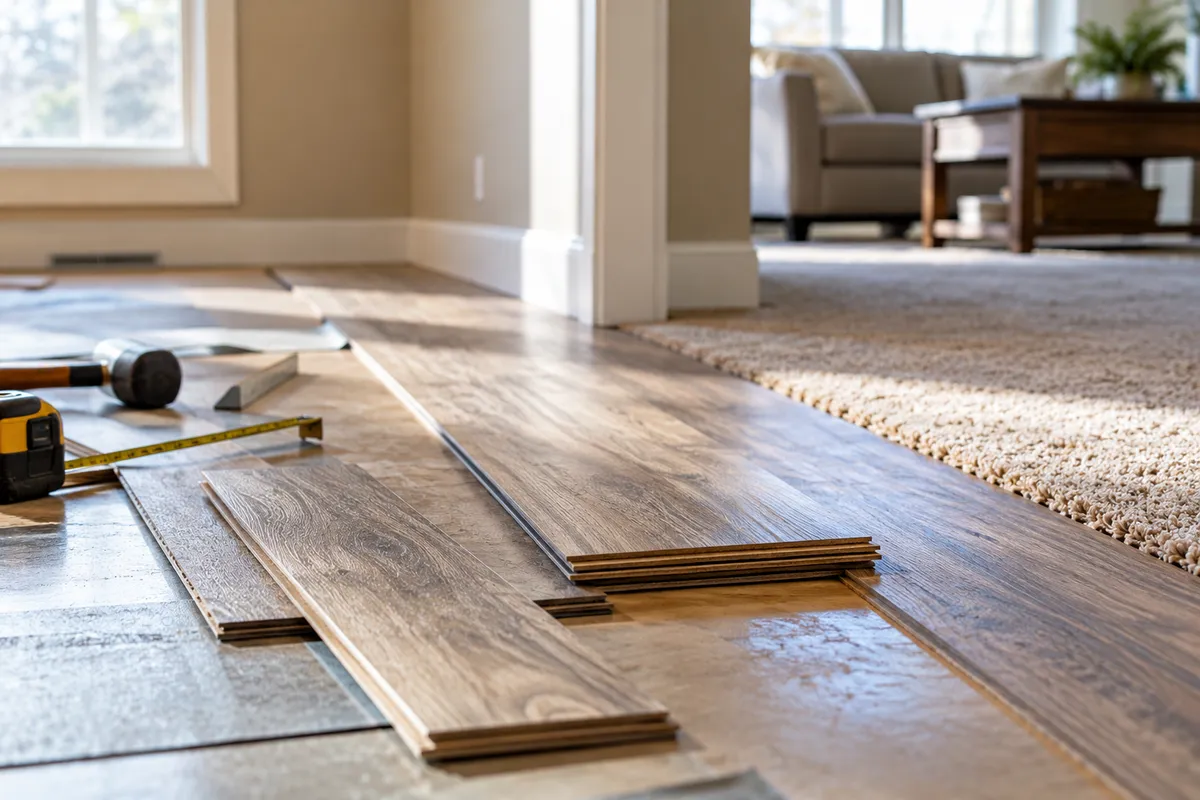
Should I Replace Flooring Before Selling My House?
You don't necessarily need to replace your flooring before selling your house. If your floors are clean, well-maintained, and in reasonably good condition, replacing them may not be worth the expense. However, flooring that is heavily stained, damaged, or noticeably worn can affect how buyers perceive your home and what they're willing to offer.
The tricky part is knowing the difference between flooring that's simply outdated and flooring that could actually hurt your sale. A carpet you no longer love might be perfectly acceptable to a buyer. On the other hand, damaged flooring in an otherwise well-maintained home can raise questions about how the property has been cared for.
Before spending money on new carpet, luxury vinyl plank, or hardwood, it helps to understand what buyers notice, which improvements may be worthwhile, and when leaving your floors alone is the smarter decision.
When Should You Replace Flooring Before Selling?
Replacing flooring before listing makes the most sense when its condition is likely to distract buyers from the home's other features or create concerns about maintenance.
Here are a few situations where replacement deserves serious consideration.
1. The Carpet Has Heavy Stains or Persistent Odors
Carpet is one of the first things buyers notice when entering a room, especially if it has visible discoloration or an unpleasant smell.
Pet odors, smoke, and moisture-related smells can be particularly concerning because buyers may wonder if the problem extends beneath the carpet.
Professional cleaning may help, but it won't solve every issue.
If the carpet has deep stains, significant wear, or odors that remain after cleaning, replacement may be the better option. If moisture or pet contamination has affected the padding or subfloor, those underlying problems should be addressed rather than simply covered with new flooring.
2. The Flooring Is Damaged or Creates a Safety Concern
Loose tiles, peeling vinyl, buckled planks, and torn carpet can make a home feel poorly maintained.
There's also a difference between cosmetic wear and a potential safety issue.
A few scratches on hardwood floors may be acceptable. A raised flooring edge that someone could trip over deserves attention.
If the damage is isolated, a professional repair might be enough. Replacing an entire room's flooring because of one damaged section could be unnecessary.
3. The Flooring Makes the Home Feel Inconsistent
Imagine walking into a home where the living room has gray laminate, the hallway has dark hardwood, and the adjoining dining room has a completely different wood-look floor.
Even when each material is in decent condition, the transitions can make the space feel visually disconnected.
Consistent flooring can help adjoining rooms feel more cohesive, particularly in open floor plans.
That doesn't mean every room needs identical flooring. It means considering how the materials work together.
4. The Flooring Looks Significantly More Worn Than the Rest of the Home
Buyers tend to evaluate a home's condition as a whole.
If the kitchen has updated cabinets, the walls are freshly painted, and the fixtures are in good condition, severely worn flooring may stand out.
In this situation, replacement could help the home feel more consistent with its overall condition.
The decision should still depend on the property's price range, comparable listings, and the cost of the work.
When Is It Better to Keep Your Existing Flooring?
Not every imperfection needs to be corrected before listing.
In fact, there are several situations where keeping the existing flooring makes good financial sense.
The flooring is dated but well-maintained. Older oak hardwood, traditional tile, or carpet in an unfashionable color may not match current design preferences, but that doesn't automatically make it a problem.
The wear is minor. Small scratches, light scuffs, or normal signs of use are often acceptable, particularly in an older home.
The flooring can be professionally cleaned or repaired. A deep carpet cleaning, tile and grout cleaning, or hardwood refinishing may improve the appearance without requiring complete replacement.
The buyer may want to renovate anyway. If the home has several original finishes, installing brand-new flooring in just one room may not meaningfully change how buyers evaluate the property.
Here's something I encourage sellers to remember: buyers don't expect every existing home to look brand-new.
They do, however, want to understand its condition and feel comfortable with the work they may need to do after purchasing it.
Which Flooring Improvements Are Worth Considering Before Selling?
Different flooring materials present different opportunities for improvement.
The right choice depends on the condition of your existing floors, the type of home, and the amount you're comfortable spending.
Flooring type | What to consider before selling |
Carpet | Professional cleaning first; replacement if heavily stained, worn, or retaining odors |
Hardwood | Cleaning, minor repairs, or refinishing if the wood is suitable |
Luxury vinyl plank (LVP) | Repairing damaged sections or replacing flooring where broader deterioration exists |
Laminate | Addressing swelling, separation, or damaged boards |
Tile | Repairing loose or cracked tiles and cleaning or refreshing grout |
Sheet vinyl | Replacing torn, peeling, or severely discolored areas when repairs aren't practical |
Is Luxury Vinyl Plank a Good Choice for Resale?
Luxury vinyl plank, commonly called LVP, can be a practical option for sellers who need to replace flooring.
It offers a wood-look appearance and is available in products designed to handle everyday wear and moisture exposure.
However, not all LVP is equal.
Quality, installation, subfloor preparation, and appearance all matter. Poorly installed flooring can create gaps, movement, or uneven transitions that buyers may notice.
It's also worth considering the home's overall finish level. A flooring material that works well in one property may not be the best fit for another.
Should You Replace Carpet With Hardwood?
Not automatically.
Hardwood can be an attractive feature, but installing it solely for resale may be a significant expense.
If your home already has hardwood beneath the carpet, it's worth investigating its condition before deciding what to do.
Restoring existing hardwood may be an option, although the cost and feasibility depend on the wood's condition and the work required.
If there isn't hardwood underneath, compare the cost of installing new hardwood with other suitable materials before committing.
Is Carpet Still Acceptable to Homebuyers?
Yes. Carpet can still be perfectly acceptable, especially in bedrooms.
Some buyers appreciate the softer surface, while others prefer hard flooring because of maintenance, pets, or personal preference.
The important distinction is between carpet that's clean and functional and carpet that looks worn out.
A well-maintained carpet doesn't necessarily need replacing simply because hard-surface flooring is popular.
How Much Does Replacing Flooring Affect Your Home's Sale Price?
New flooring can improve a home's presentation and appeal, but it does not guarantee a higher sale price or a full return on the money spent.
This is where sellers sometimes make an expensive assumption.
If you spend $8,000 replacing flooring, that doesn't mean your home will automatically sell for $8,000 more.
Buyers evaluate the entire property, including its location, size, layout, condition, features, and asking price.
New flooring may help a home compete more effectively with similar listings. It may also reduce the number of immediate improvements a buyer feels they need to make.
But those benefits don't always translate into a dollar-for-dollar increase in value.
Think About Your Net Proceeds, Not Just the Selling Price
Consider this hypothetical example.
A homeowner in Cambridge is preparing to sell a house with worn carpeting throughout the main living area and bedrooms.
A flooring contractor provides a quote of $6,500 for replacement.
The homeowner now has two options:
Spend $6,500 before listing and hope the improvement helps support a stronger offer.
Keep the existing carpet, price the home appropriately for its condition, and allow the buyer to choose their own flooring.
Neither option is automatically better.
If comparable homes at the intended price point generally have updated flooring, replacement may help the property compete.
But if the home is already priced to reflect its condition, spending the additional money might not produce a meaningful financial benefit.
The goal isn't simply to achieve the highest possible sale price. It's to consider what you may actually keep after preparation expenses and selling costs.
That's why reviewing comparable properties before approving a major flooring project is so important.
What Should East Central Minnesota Sellers Consider?
In East Central Minnesota, flooring decisions should account for the property's layout, age, condition, and how the spaces are used.
A home in a residential neighborhood may have different flooring needs than a rural property with acreage, outbuildings, or frequently used exterior entrances.
For example, a home with a mudroom connecting the garage or outdoors to the main living area may benefit from durable, easy-to-clean flooring in that space.
Minnesota's snow, road salt, wet boots, and seasonal moisture make entryway flooring particularly important from a practical standpoint.
A material that looks beautiful in a bedroom might not be the best choice for a heavily used entrance.
Pay Attention to Basements and Lower Levels
Finished basements are another area where flooring decisions require care.
Before replacing basement carpet or installing new vinyl flooring, check for signs of moisture problems.
Staining, musty odors, dampness, or recurring flooring damage deserve further investigation.
Simply installing new flooring over an unresolved moisture issue can create additional problems.
Some flooring products are more moisture-resistant than others, but that doesn't mean they eliminate moisture concerns in the concrete or underlying structure.
If there's evidence of water intrusion, have the cause evaluated by a qualified professional before installing new materials.
Older Homes May Need Extra Evaluation
Some older homes in Cambridge, Isanti, North Branch, Braham, and surrounding communities have flooring that has been installed or replaced several times over the years.
Before removing old flooring, consider what materials may be underneath.
Certain older flooring products and adhesives may contain asbestos. If you suspect asbestos-containing material, avoid disturbing it until an appropriately qualified professional has evaluated it.
The Minnesota Department of Health provides information about asbestos in homes and safe handling considerations.
You can learn more through the Minnesota Department of Health.
These considerations don't mean older flooring always needs to be replaced. They mean it's important to understand what you're working with before starting demolition.
A Common Mistake: Replacing Flooring Before Evaluating the Home
One mistake sellers can make is choosing expensive improvements before determining which ones will actually help their property.
It's understandable. You want your home to look its best, and new flooring feels like a noticeable improvement.
But flooring is only one part of preparing a house for sale.
Imagine spending several thousand dollars on new floors while overlooking damaged trim, peeling paint, or a maintenance issue that buyers are likely to consider more important.
The flooring might look beautiful, but the overall presentation could still need attention.
Another common mistake is selecting materials based entirely on personal taste.
A bold flooring color or unusual pattern may appeal to you, but it could limit the number of buyers who find it attractive.
If replacement is necessary, neutral, versatile materials that complement the home are generally a safer choice than highly personalized designs.
And don't assume the most expensive flooring will deliver the best result.
A properly installed, reasonably priced product that fits the home can be a better decision than a premium material that doesn't match the property's overall condition or price point.
How to Decide What to Do With Your Floors Before Listing
Before scheduling a flooring installation, take a little time to evaluate your options.
Step 1: Look at Your Flooring From a Buyer's Perspective
Walk through your home and pay attention to what someone unfamiliar with the property might notice.
Look for visible stains, scratches, worn areas, uneven surfaces, damaged transitions, and odors.
Be particularly attentive to entryways, hallways, kitchens, and main living areas.
These spaces often receive considerable foot traffic and can influence a buyer's first impression.
Step 2: Separate Cosmetic Issues From Actual Damage
A floor that's outdated is different from one that's deteriorating.
Cosmetic concerns may be addressed through cleaning, refinishing, or minor repairs.
Problems involving moisture, structural movement, or significant damage may require a professional evaluation.
This distinction helps prevent unnecessary spending.
Step 3: Get Estimates Before Making a Decision
If replacement appears necessary, request detailed estimates from qualified flooring professionals.
Make sure the quotes account for the complete project, including:
Removal and disposal of existing flooring
Subfloor preparation or repairs
Materials and installation
Trim, transitions, and finishing work
Any additional work discovered during removal
An inexpensive flooring product doesn't necessarily mean the total installation will be inexpensive.
Unexpected subfloor repairs, for example, can increase the final cost.
Step 4: Compare Your Home With Similar Properties
This is where local real estate guidance becomes especially valuable.
Look at comparable homes that have recently sold and properties currently competing for buyers.
Consider their flooring condition, overall updates, and pricing.
A home with original flooring may still be competitive if its condition and asking price make sense.
On the other hand, a property positioned alongside extensively updated homes may benefit from additional preparation.
The comparison should be based on relevant properties, not simply whatever design trends are popular online.
Step 5: Make the Decision Before Photography and Showings
If you're going to replace or refinish flooring, ideally complete the work before professional listing photography.
Floors are visible in listing photos, and inconsistent or unfinished surfaces can affect how rooms appear.
Completing the work beforehand also avoids disrupting showings with installation appointments, equipment, and construction materials.
If replacement isn't necessary, a thorough cleaning and a few targeted repairs may be all you need.
Frequently Asked Questions
Should I Replace Flooring Before Selling My House if It's Outdated?
Not necessarily. Outdated flooring can still be acceptable if it's clean, functional, and in good condition. Consider how it compares with flooring in similar homes and whether replacement is likely to improve your home's marketability enough to justify the expense.
Is It Better to Replace Carpet or Offer a Flooring Allowance?
It depends on the carpet's condition and the buyer's preferences. Replacing badly worn carpet before listing can improve presentation. A negotiated flooring allowance or seller credit may give buyers flexibility, but the terms must be acceptable to both parties and may be subject to lender requirements.
Can I Sell My House With Damaged Flooring?
Yes, a house can be sold with damaged flooring, although the condition may affect buyer interest, offers, or negotiations. Significant damage should be disclosed as required, and safety or underlying moisture concerns deserve attention. Buyers may request repairs or negotiate based on the work they expect to complete.
Does New Flooring Increase Home Value?
New flooring may contribute to a home's appeal and perceived condition, but the effect on market value varies. The material, installation quality, existing flooring condition, and comparable home sales all influence whether replacement is financially worthwhile.
Should I Replace Flooring Throughout the Entire House or Just Certain Rooms?
Targeted replacement is often worth considering first. If only one or two rooms have severely worn flooring, replacing those areas may be sufficient. However, adjoining spaces and visible transitions should be considered so the finished result looks intentional and cohesive.
Making the Right Flooring Decision Before You Sell
You don't need to renovate every room to prepare your home for sale.
Sometimes new flooring is a worthwhile investment. Other times, professional cleaning, a few repairs, and appropriate pricing are the better approach.
The important thing is to make that decision based on your home's condition and how it compares with other properties, rather than assuming every update will pay for itself.
I've been helping Minnesota buyers and sellers since 2001, and I know how important it is to prioritize improvements that make sense for the individual property.
If you're considering selling in East Central Minnesota, I'm happy to help you evaluate your home's condition and decide which updates deserve your attention before listing.
Let's Talk
Amy Grafenstein
REALTOR® RE/MAX Results
Call or Text: 612-363-0934
Email: [email protected]
Website: www.amygrafenstein.com