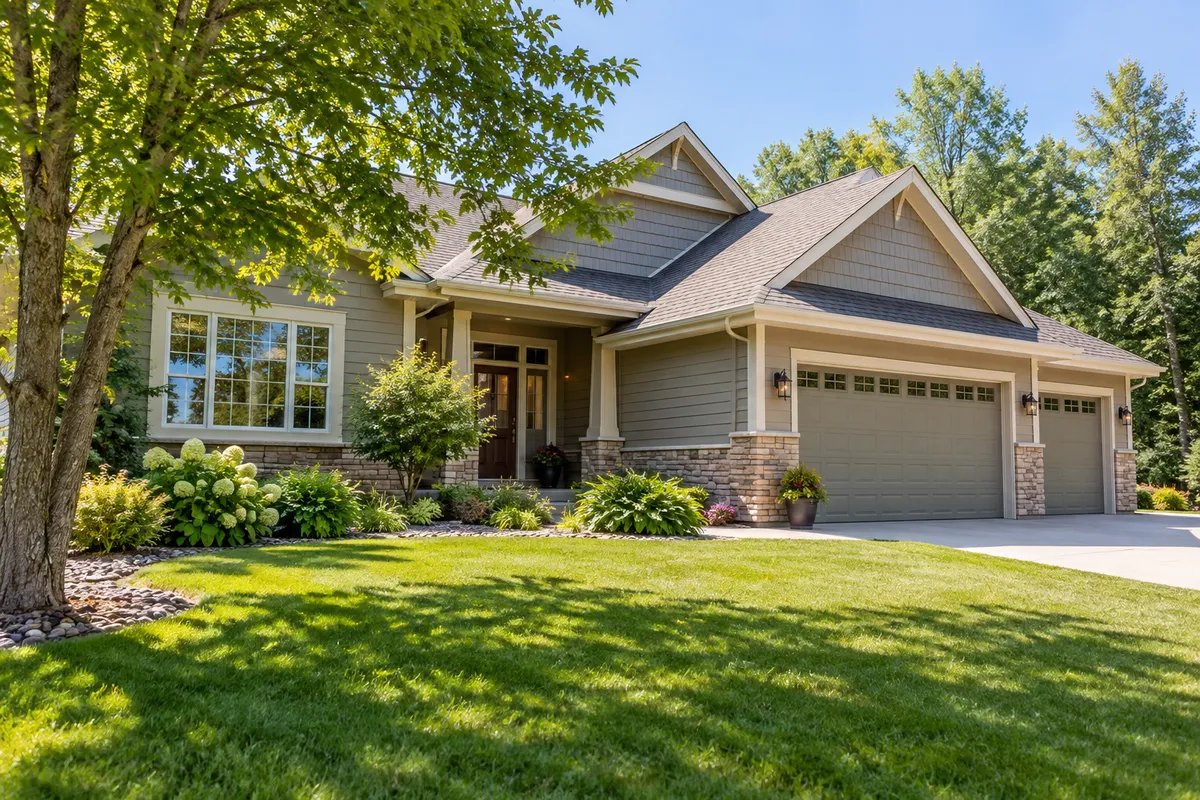
How Do I Know What My House Is Worth in East Central Minnesota?
The best way to know what your house is worth in East Central Minnesota is to look at recent comparable sales, your home’s specific features and condition, its location, and what buyers are currently paying for similar properties. A good estimate is not based on one number from a website, your property tax value, or what a nearby home sold for without understanding how that property compares to yours.
That distinction matters in this part of Minnesota. Two homes that look similar on paper can have meaningful differences: acreage, outbuildings, finished square footage, updates, road type, waterfront or other land features, and private well and septic systems can all affect how buyers compare properties.
If you are thinking about selling, the goal is not simply to find the highest possible estimate. You want a realistic market value range that helps you decide what your home could reasonably sell for and how it should be positioned when it reaches the market.
What Determines Your Home’s Value in East Central Minnesota?
A home is ultimately worth what a qualified, willing buyer is prepared to pay under normal market conditions. Minnesota describes market value in similar terms: the probable price a property would bring in a competitive, open market when the buyer and seller are informed and typically motivated.
Several pieces of information help us estimate that number before a sale takes place.
Recent comparable sales
Comparable sales—often called “comps”—are properties that have actually sold and are reasonably similar to yours.
Useful comparisons may consider:
Location
Property type and style
Finished square footage
Number of bedrooms and bathrooms
Age
Lot size or acreage
Garage and outbuildings
Overall condition
Renovations and improvements
Basement finish
Well and septic considerations, when applicable
Other property-specific features
The word recent is important. A sale from several years ago may tell you something about the property, but it may say very little about what buyers would pay for your house now.
And the closest house geographically is not automatically the best comparable.
Your home’s condition
Condition affects both value and how buyers respond to a listing.
There is a difference between a home with a recently updated roof, mechanical systems, windows, kitchen, or bathrooms and one where a buyer expects to make substantial improvements after closing. That does not mean every renovation returns its full cost. It means condition has to be considered alongside the other characteristics of the property.
Keeping a record of improvements is helpful for exactly this reason. When preparing a home for sale, I ask sellers to identify interior and exterior renovations and when they were completed so those details can be considered when evaluating and marketing the property.
The location—and the property within that location
Location goes deeper than the name of the city or county.
A house in Cambridge should not automatically be compared with every other house in Cambridge. The same applies in Isanti, North Branch, Braham and throughout the surrounding counties.
The specific setting matters. So can lot characteristics, acreage, nearby land uses, access, property type and other factors that influence how buyers perceive one property compared with another.
That becomes especially important as you move outside more conventional residential developments.
Why Online Home Value Estimates Can Be Misleading
Online home-value tools can be useful as a starting point, but I would not use one by itself to decide what to list a house for.
Automated valuation tools work primarily from available property records and sales data. What they cannot always understand well is the context behind those numbers.
For example, an automated system may not fully account for the difference between two properties when one has substantial interior improvements and the other does not. It may have difficulty assigning appropriate value to an outbuilding, unusual acreage, a finished lower level, or another feature when there are few genuinely comparable sales nearby.
This can become particularly noticeable with properties that are less standardized.
A relatively typical home surrounded by many similar homes may be easier for an automated model to estimate. A rural property with acreage, multiple structures and fewer nearby comparable sales can require considerably more interpretation.
So if an online estimate says your home is worth $X, think of that number as one data point—not the answer.
Is My Minnesota Property Tax Value the Same as My Home’s Market Value?
No. Your property tax value should not automatically be treated as the price your home would sell for today.
Minnesota county assessors determine an Estimated Market Value (EMV) for property as part of the property-tax system. The Minnesota Department of Revenue explains that assessors use a mass-appraisal process, reviewing sales of similar properties and adjusting for market trends. The assessment is tied to a specific assessment date.
The state even conducts sales-ratio studies comparing assessor values with actual sale prices to evaluate the accuracy and uniformity of assessments.
That makes your assessor's value useful information, but it is not a substitute for analyzing your home specifically for a possible sale.
There is another number homeowners sometimes see: Taxable Market Value (TMV). That figure can differ from Estimated Market Value because exclusions, deferrals and other adjustments may apply before the taxable value is calculated.
So when you are trying to answer, “What could I realistically sell my house for?” your tax statement should not be the only place you look.
How a Real Estate Professional Determines What Your House Is Worth
When I prepare a market analysis for a seller, I am not simply looking for three nearby sales and averaging their prices.
The process starts with the property itself.
I want to understand what you own, what has changed since you bought it, its condition, its setting, and which characteristics are likely to matter to buyers. From there, I look for the most relevant available market evidence.
A useful comparative market analysis generally involves:
Reviewing the property. Size, layout, age, condition, improvements, lot or acreage, garage, outbuildings and other important characteristics need to be understood.
Finding the strongest comparable sales. The goal is similarity, not simply proximity.
Accounting for meaningful differences. A comparable does not have to be identical, but differences between it and the subject property need to be considered.
Looking beyond sold listings. Active and pending properties can provide useful context about the competition and current buyer choices, although completed sales provide important evidence of what buyers have actually paid.
Developing a reasonable value range. Real estate valuation is rarely as precise as saying a home is worth exactly one dollar amount before the market has tested it.
This market analysis then becomes part of a larger pricing discussion. Amy's seller process includes reviewing the market analysis, evaluating the property, reviewing local market information and establishing a sale price before the property is listed.
East Central Minnesota Homes Aren’t Always Easy to Compare
This is where local experience becomes especially useful.
Imagine two homes in Isanti County with roughly similar finished square footage and the same number of bedrooms. At first glance, they may appear to be good comparables.
Then you look closer.
One sits on a conventional residential lot. The other has several acres and an outbuilding. One has recently updated major systems. The other has older components. One may have municipal utilities while another property may rely on a private well and septic system.
Simply comparing their sale prices per square foot could miss important differences.
That does not mean there is a standard dollar adjustment for every acre, pole building, bathroom renovation or new furnace. There usually isn't. The contribution of a feature depends partly on the property and on how the local market responds to it.
This is one reason I want sellers to provide details about improvements before listing. Those details help build a more complete picture of the property rather than relying only on what appears in public records.
Market Value, List Price and Appraised Value Are Different Things
These terms often get mixed together, but they do not mean exactly the same thing.
Market value is an estimate of what a property is likely to bring in an open and competitive market.
List price is the price the seller chooses to put on the property when it is offered for sale. Ideally, that decision is informed by market value and the seller's strategy, but the two numbers do not have to be identical.
Sale price is what a buyer and seller ultimately agree to in the purchase agreement.
Appraised value comes from a formal appraisal. Minnesota law defines an appraisal as the process of developing an opinion of value, and appraisal work is performed under specific professional standards.
A comparative market analysis prepared for a seller and a licensed appraisal are therefore not the same thing.
For a homeowner deciding whether to sell and at what price, a detailed market analysis is generally the practical place to begin. A formal appraisal may be needed for other purposes, depending on the circumstances.
What Sellers Often Get Wrong About Home Value
One of the easiest mistakes is starting with the number you want or need and working backward.
You may have a certain amount you hope to walk away with after the sale. That is important for your financial planning, but it does not determine market value.
The same applies to what you paid for the home.
If you purchased for a certain amount several years ago and then spent money improving it, adding the renovation costs to the original purchase price does not automatically tell you what the property is worth now.
Buyers compare your property with the alternatives available to them. That is why current market evidence matters so much.
Another common mistake is putting too much weight on a neighbor's sale:
“The house down the road sold for $425,000, so mine should be worth at least that.”
Maybe—but we need more information.
Was it actually similar in size? How much land came with it? What was its condition? Did it have an additional garage or outbuilding? When did it sell? Were there concessions or unusual circumstances involved?
A nearby sale can be an excellent comparable. It can also be a poor one.
Your Home’s Value and Your Listing Price Require Two Different Conversations
Once you have a reasonable idea of market value, there is still another decision to make: How should the home be priced when it goes on the market?
Pricing is part valuation and part market strategy.
A seller might understandably think there is little downside to starting high because “we can always come down later.” The problem is that buyers are evaluating the property against competing listings from the moment it appears.
If the price and the property do not make sense together, buyers may choose other homes instead.
Price also does not work alone.
Condition, preparation, professional photography, marketing, showing experience and exposure all influence how buyers encounter the property. Amy's established seller process includes preparing the property before it becomes active, professional photography and videography, marketing, showings and seller updates once the home reaches the market.
The strongest pricing strategy is therefore not simply, “What number can we put on it?”
It is:
What does the evidence tell us the property is worth, how will buyers compare it with the competition, and how should we position it accordingly?
What Should I Do Before Asking for a Home Value Estimate?
You do not need to remodel the house or prepare it for photography before someone can evaluate it.
But gathering a few details can make the conversation much more useful.
Make a simple list of improvements you have made during your ownership. Include approximate dates for larger projects such as the roof, siding, windows, furnace, air conditioning, kitchen, bathrooms, flooring, electrical or plumbing work, garage, deck and septic improvements when applicable.
Also think about features that may not be obvious from a property record.
What do you like most about the property? What improvements have made a meaningful difference? Are there useful features in the garage or outbuildings? Is there something about the land or layout that someone seeing the basic property data would miss?
Amy has been helping Minnesota buyers and sellers since 2001, and experience has taught me that understanding those details matters. A house is not just its bedroom count and square footage. The numbers give us a framework; the property itself gives those numbers context.
Frequently Asked Questions
How can I find out what my house is worth in East Central Minnesota?
Start with a comparative market analysis that examines recent relevant sales, your home's location, size, condition, improvements, lot or acreage, and other property-specific characteristics. Online estimates and your county's Estimated Market Value can provide additional reference points, but neither should automatically determine your listing price.
Is Zillow or another online estimate accurate enough to price my house?
An automated estimate can be useful for an initial reference, but it should not be relied upon by itself for pricing. The more unusual the property is—or the fewer truly comparable sales there are—the more important property-specific analysis becomes.
Why is my home's assessed value different from what it might sell for?
Minnesota assessors establish Estimated Market Value as part of the property-tax assessment process and use mass-appraisal methods that consider sales of similar properties. A seller's current market analysis looks specifically at the individual property and relevant market evidence for a potential sale.
Do renovations increase my home's value by what I spent on them?
Not necessarily. The cost of an improvement and the value buyers place on it are two different things. Some improvements can improve marketability and contribute to value, but you should not assume that spending $30,000 automatically adds $30,000 to the sale price.
Should I get an appraisal before selling my house?
Most sellers do not need to start with a formal appraisal simply to discuss a potential listing price. A detailed comparative market analysis can help establish a reasonable market range and pricing strategy. There are circumstances where a formal appraisal may be appropriate, so the right approach depends on why you need the valuation.
A Good Home Value Starts With Good Information
If you are trying to figure out what your house is worth, do not get too attached to a single number from an online calculator, tax record or neighborhood sale.
Start with the property itself and the best available comparable market evidence. From there, you can establish a realistic range and make a much better decision about pricing, timing and whether selling makes sense for you.
If you own a home in East Central Minnesota and would like to understand what the current market evidence says about your property, Let’s Talk.
Amy Grafenstein, REALTOR®
RE/MAX Results
Call or Text: 612-363-0934
Email: [email protected]
Website: amygrafenstein.com